Does an old refrigerator use more electricity?
 Ethan Hayes
 .
Then, do old refrigerators use a lot of electricity?
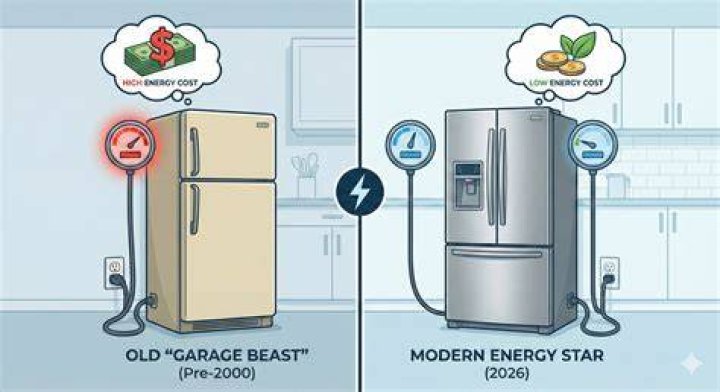
A 20-year-old refrigerator could use 1,700 kWh of electricity every year, compared with about 450 kWh for a similarly sized new ENERGY STAR model. At an electrical cost of 12 cents per kWh, that represents a savings of $150 per year and a potential payback of about 7-9 years.
how many kilowatts does an old refrigerator use? A 1986-era 18 c.f. fridge uses 1400 kWh a year, while a modern energy-efficient model uses only 350 kWh — a whopping 75% reduction. At 15¢ kWh, trading in a pre-1986 fridge for a new efficient one would save about $158 a year in electricity costs. And some older fridges are even worse than the average.
Simply so, how much does it cost to run an old fridge?
I plugged in my own old General Electric refrigerator from 1998, and it estimated an annual electricity cost of $126.05 (based on $. 11 per KWh). This cost was more than double what a new energy efficient model might cost to run, which Energy Star estimated at $58 per year.
How much electricity does an old fridge freezer use?
| Appliance | Average consumption (kWh/year) | Average running cost (£/year) |
|---|---|---|
| Fridge-freezer | 427 | 62.00 |
| Upright freezer | 327 | 47.50 |
| Chest freezer | 362 | 52.50 |
| Oven (without hob) | 290 | 42.00 |
Related Question Answers
Should I replace my 20 year old refrigerator?
If your side-by-side refrigerator is older than five years old and in need of constant repairs, it's time to consider buying a new one. It's best that bottom freezers be replaced after seven years and faulty top freezers be repaired if they are more than seven years old.Should a refrigerator run all the time?
Your refrigerator's condenser coils should be cleaned twice a year. If the freezer temperature is above 10 degrees Fahrenheit (-12C), the refrigerator will not be cold enough. If the refrigerator is not cold enough, it will work harder to cold down. As a result, it will run constantly.How much does it cost to run a refrigerator for a month?
A typical fridge of about 400-500 litres can use around 495kWh of electricity each year, which equates to a cost of about $163.35, based on an energy usage rate 33c/kWh. Energy usage rates vary across the country, but typically around 13 per cent of your energy bill is likely to be attributed to running your fridge.What is the average cost to run a refrigerator per month?
Find the monthly operating cost by multiplying your daily cost by 30. At the California average electricity price, a 300-watt unit costs $11.70 per month, or $140.40 per year. Refrigerators with a lower wattage rating will require much less energy, and thus cost much less to operate.How many hours does a refrigerator run per day?
refrigerator, on average, uses approximately 540 W (watts), and is "on" and running approximately 8 hours per day. Converting this to kWh (kilowatt hour) consumption requires dividing the wattage by 1000, and multiplying by 8 hours, which equals 4.32, or rounded 4 kWh per day.Why is my electric bill so high all of a sudden?
Faulty AppliancesYour washing machine, tumble dryers, ovens and dishwashers are some of the biggest energy consumers in your household. You may have forgotten to switch off some of these appliances and left them on overnight. This can cause a sudden increase in your electricity bill.What appliance uses the most electricity?
Here's what uses the most energy in your home:- Water heater: 14% of energy use.
- Washer and dryer: 13% of energy use.
- Lighting: 12% of energy use.
- Refrigerator: 4% of energy use.
- Electric oven: 3-4% of energy use.
- TV, DVD, cable box: 3% of energy use.
- Dishwasher: 2% of energy use.
- Computer: 1% of energy use.
How do you maintain a fridge when not in use?
Open the doors of both the refrigerator and freezer compartments. Partially open the top of a baking soda box and place it in the refrigerator. Leave the refrigerator open for a few days, if possible. Thoroughly airing out the interior prevents the formation of mold and mildew over the long term.Do old fridges use a lot of electricity?
Over a full day they are likely to use around 1 to 2 kilowatt-hours (kWh). Old domestic refrigerators and commercial refrigerators consume much more. The actual energy consumption of your fridge or freezer will depend on many factors. Size – larger fridges generally use more electricity.How much does it cost to run a fridge freezer per week?
Fridge Freezer: around 12p a dayA 240 litre fridge freezer uses 269 kWh a year and bulky American style fridge freezers use about 358 kWh – that's around 12p – 16p per day.Does a refrigerator in the garage use more electricity?
Yes, a refrigerator in a garage can cost a little more to run, especially in the hot summer months versus a refrigerator in your air-conditioned kitchen. Data from FPL research performed in Florida indicates that a refrigerator in the garage costs $11 more each year to run than a refrigerator in the kitchen.How much power does it take to run a refrigerator?
A fridge will use anywhere from 100 to 400 watts depending on size, a large fridge will use about 180 watts or 1575 kWh annually.How many appliances can a 5500 watt generator run?
A 5500 watt generator provides approximately 45 amps, in case of 120 volts or 23 amps in case of 240 volts. In layman's terms, a 5500 watt generator can run almost any essential household appliance, including: Small window AC unit. Fridge with a freezer.How much power do appliances use?
High Electricity Bills? These Appliances Cost the Most Money to Run
| Appliance | Typical Consumption Per Hour | Cost Per Hour (at 10 cents per kilowatt-hour) |
|---|---|---|
| Space heater | 1,500 watts | 15 cents |
| Hair dryer | 1,200 watts | 12 cents |
| Electric range burner | 1,000 watts | 10 cents |
| Refrigerator | 1,000 watts | 10 cents |
How do I know how much electricity an appliance uses?
Steps- Find the wattage on the appliance label. Most high-power appliances have an energy label on the back or base of the appliance.
- Multiply wattage by hours used each day.
- Divide the result by 1,000.
- Multiply your answer by the number of days you're measuring.
- Multiply by the cost of electricity per kWh.