Spermatoceles are filled with fluid, so light will shine through them (transillumination). Light will not pass through solid masses that may be caused by other problems, such as cancer of the testicle. An ultrasound may be used to confirm the diagnosis of a spermatocele..
Moreover, does a Spermatocele Transilluminate?
Spermatocele. A spermatocele (Figure 5) usually presents as a painless cystic mass separate from the testis. Typically, a spermatocele is located superior and posterior to the testis, is freely movable and transilluminates easily. Aspiration of the contents usually reveals dead sperm.
One may also ask, how do you know if you have a Spermatocele? A spermatocele can be diagnosed through a detailed examination of the genital area. Your doctor will feel your testicles to search for masses, or areas that are tender or painful to the touch. You can expect to feel some pain when your doctor touches the affected areas.
In this way, does Spermatocele disappear?
Although your spermatocele probably won't go away on its own, most spermatoceles don't need treatment. They generally don't cause pain or complications. If yours is painful, your doctor might recommend over-the-counter pain medications, such as acetaminophen (Tylenol, others) or ibuprofen (Advil, Motrin IB, others).
How common is a Spermatocele?
Small spermatoceles are relatively common, occurring in an estimated 30 percent of all men. They vary in size from several millimeters to many centimeters. Spermatoceles are generally not painful. However, some men may experience discomfort from larger spermatoceles.
Related Question Answers
How big can a Spermatocele get?
They can get to be as large as 15 cm, and some patients will present with concern that they “have a third testicle.” The consistency of a large spermatocele is, in fact, similar to that of a normal testis. Spermatoceles rarely cause pain.How do you pop a Spermatocele?
Aspiration is a procedure that can help relieve some of the pain and pressure of spermatoceles. Your doctor will insert a needle into the cyst to remove some of the fluid. If the cyst refills and comes back, your doctor can do a procedure called a sclerotherapy. He'll drain some of the fluid from the spermatocele.How long does Spermatocele last?
Scrotal swelling is normal and typically lasts for 2 to 21 days. Side effects from surgery are not common, but can involve fever, infection, bleeding (scrotal hematoma), and lasting pain. Spermatoceles can come back in about 10 ouy of 25 cases.Is a Spermatocele attached to the testicle?
A spermatocele is a cyst that develops in the epididymis (a coiled tube attached to the testicle which helps transport sperm). Spermatoceles are noncancerous (benign) and generally painless, but as with any abnormality in the scrotum, they ought to be investigated.What is the difference between hydrocele and Spermatocele?
Spermatoceles typically arise from the caput (head) of the epididymis, which is located on the superior aspect of the testicle. Conversely, hydroceles are fluid collections that cover the anterior and lateral surfaces the testicle. In contrast to the epididymal cyst, spermatocele fluid typically contains sperm.Where is a Spermatocele located?
A spermatocele (SPUR-muh-toe-seel) is an abnormal sac (cyst) that develops in the epididymis — the small, coiled tube located on the upper testicle that collects and transports sperm.What to expect after having a Spermatocele removed?
This surgery was done to remove the fluid and to stop the buildup of fluid in the scrotum. After your surgery, you may feel more tired than usual and have some mild groin pain for several days. Your groin and scrotum may be swollen or bruised. This usually gets better in 2 to 3 weeks.Does Spermatocele affect testosterone?
Some studies have shown that a varicocele causes low testosterone levels. The results showed that regardless of age, the men with varicoceles had significantly lower testosterone levels than the men without them.Can you move a Spermatocele?
A spermatocele is a fluid collection or cyst that forms in the epididymis behind your testicles. The cyst will feel like a smooth mass near your testicles that you can move inside your scrotum. The mass is not cancer. A spermatocele is usually not painful, but you may feel heaviness in your scrotum.How common are testicular cysts?
This type of testicular lump is the most common type. It occurs in about one in every seven men, according to Weill Cornell Medical College. Enlarged veins in your testicles cause varicocele lumps. They become more noticeable after puberty, which is when blood flow increases in your fully developed testicles.How big are epididymal cysts?
Signs and symptomsTypically, epididymal cysts and spermatoceles do not cause symptoms. When discovered, the epididymal cyst is usually about the size of a pea and feels separate from the top of the testis. Spermatoceles typically arise from the head of the epididymis, and are felt on the top portion of the testicle.Can STD cause lump on testicle?
Epididymitis - Inflammation of the epididymis (the tube along the back of the testicle that carries and stores sperm). Chlamydia and gonorrhea can cause epididymitis. These lumps of abnormal testicular tissue can usually be felt in the scrotum, and can occasionally cause pain and/or swelling.How do they remove a cyst from your testicle?
The procedureDuring epididymal cyst surgery, your surgeon will make a small incision in your scrotum over the cyst. The cyst is separated from the tissue that surrounds it and is removed. The epididymis and the skin incision are sewn up using dissolvable stitches.Can you get Spermatocele after vasectomy?
After a vasectomy, a man should have negative or nonmotile sperm in their semen sample. In rare cases, the vas deferens that were cut can grow back together over time.Can you get a cyst on your testicle?
Also known as a spermatic cyst or epididymal cyst, spermatocele is a typically painless, noncancerous (benign), fluid-filled sac in the scrotum, usually above the testicle. Epididymitis. This is inflammation of the epididymis, the comma-shaped structure above and behind the testicle that stores and transports sperm.What is a pea sized lump in testicle?
A painless lump or swelling on either testicle. If found early, a testicular tumor may be about the size of a pea or a marble, but it can grow much larger. Or testicular cancer may cause the testicle to grow bigger or to become smaller. Dull ache in the lower abdomen or groin. Sudden buildup of fluid in the scrotum.What does a testicular cyst feel like?
A spermatocele (epididymal cyst) is a painless, fluid-filled cyst in the long, tightly coiled tube that lies above and behind each testicle (epididymis). It feels like a smooth, firm lump in the scrotum on top of the testicle. Having a spermatocele doesn't affect a man's fertility.What does an inflamed epididymis feel like?
Signs and symptoms of epididymitis might include: A swollen, red or warm scrotum. Testicle pain and tenderness, usually on one side, that usually comes on gradually. Painful urination or an urgent or frequent need to urinate.Why is my epididymis so big?
Share on Pinterest It is common for one testicle to be bigger than the other without a serious cause. The epididymis is a duct behind the testes. Epididymitis occurs when this duct becomes inflamed, usually as a result of infection. This condition can be a sign of the sexually transmitted infection (STI) chlamydia. 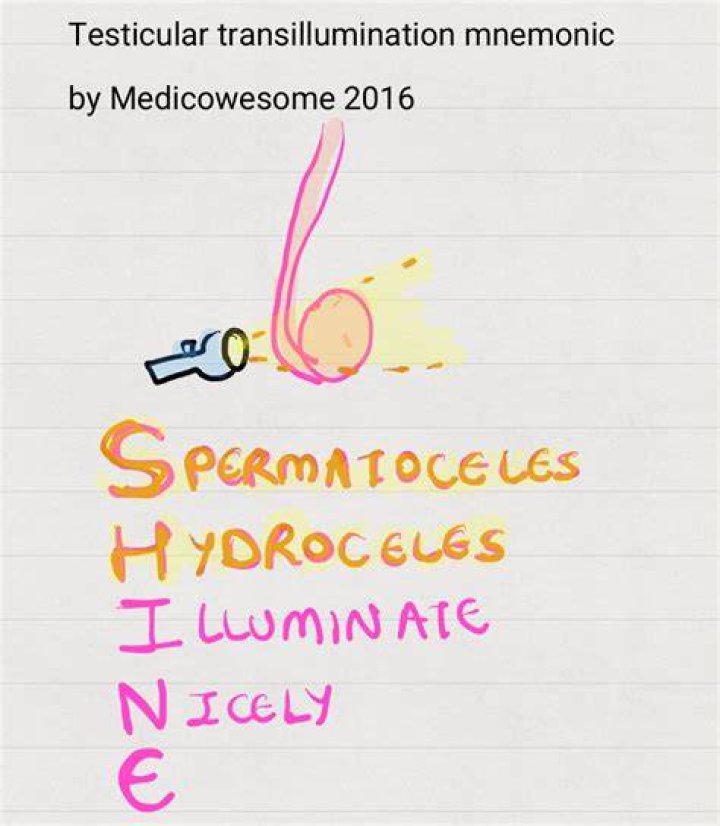
 Isabella Campbell