Should I put life insurance in a revocable trust?
 Matthew Perez
 .
Hereof, should you put life insurance in a trust?
In most cases, it makes better sense to name your beneficiaries individually on life insurance policies versus naming a trust as beneficiary. Trusts are not considered individuals; therefore, life insurance proceeds paid to trusts are generally subjected to estate tax.
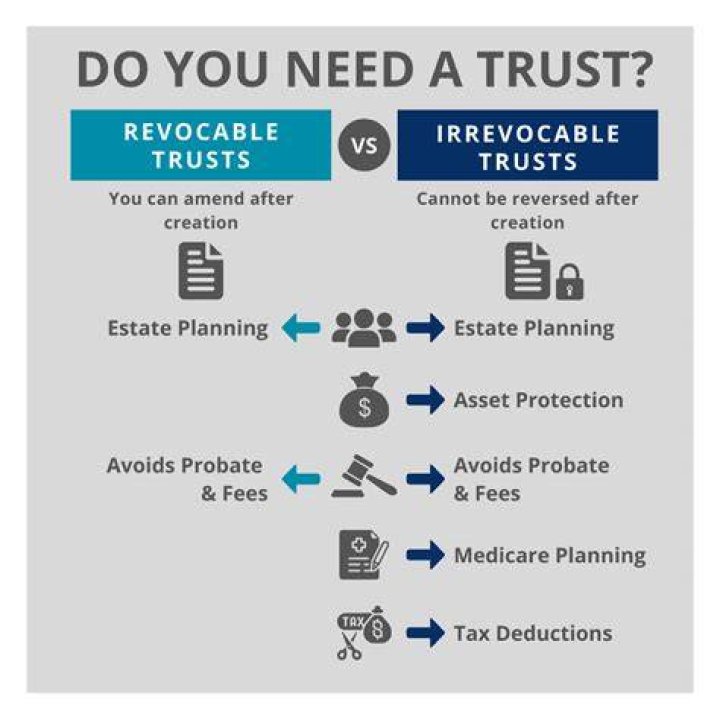
Similarly, how do I leave life insurance in a trust? A life insurance trust must be irrevocable to avoid estate taxes, so you typically can't act as trustee.
- Give Up Control. The first rule in funding a living trust with your life insurance policy is that you must give up control of it.
- Transfer Rules.
- Trust Ownership.
- Premiums.
Herein, can a revocable trust be the beneficiary of a life insurance policy?
An irrevocable trust or a revocable trust can both be listed your life insurance beneficiary, and they each come with their own set of pros and cons. You can take distributions from the trust until you pass away, at which time they're transferred to the trust's beneficiaries.
What are the disadvantages of a trust?
The Disadvantages of a Living Trust
- Characteristics of a Trust. A living trust allows someone to transfer legal ownership of assets to a trustee.
- Expense. One of the primary drawbacks to using a trust is the cost necessary to establish it.
- More Details. Trusts are often much more complex to draft compared to wills.
- Lack of Tax Advantages.
- Inconvenience.
Related Question Answers
What is the purpose of a life insurance trust?
An irrevocable life insurance trust gives you more control over your insurance policies and the money that is paid from them. It also lets you reduce or even eliminate estate taxes, so more of your estate can go to your loved ones.What is the point of a trust?
A trust is traditionally used for minimizing estate taxes and can offer other benefits as part of a well-crafted estate plan. A trust is a fiduciary arrangement that allows a third party, or trustee, to hold assets on behalf of a beneficiary or beneficiaries.Can you avoid inheritance tax with a trust?
If you place assets within a trust they will not form part of your estate on death and avoid inheritance tax. You could place assets into a trust for the benefit of your children when the reach the age of 18 for example.How do I set up a trust for my life insurance?
How to Establish a Trust Fund for a Life Insurance Beneficiary- Contact an Attorney. A trust is a legal entity; therefore an attorney should be consulted to prepare the trust documents.
- Designate the Trustee. Because the trust will be irrevocable, you are not permitted to act as the trustee.
- Choose the Beneficiaries.
- Considerations.
What would be the disadvantage of naming a trust as beneficiary of a life insurance policy?
The primary disadvantage of naming a trust as beneficiary is that the retirement plan's assets will be subjected to required minimum distribution payouts, which are calculated based on the life expectancy of the oldest beneficiary.Is life insurance payable to a trust taxable?
The beneficiaries of life insurance policies have greater tax benefits than beneficiaries of trusts, if the life insurance proceeds are directly transferred to the beneficiary upon the death of the insured and not included in the estate. If this is true, the principal amount of the life insurance proceeds is tax-free.How do trust funds pay out?
The principal may generate an income in the form of interest paid on the principal. Simple trusts may not hold onto the income earned by the principal, so they must distribute that income to beneficiaries (you can't distribute the principal — also called the trust corpus — or pay money out of the trust to a charity).Are life insurance proceeds included in gross estate?
Section 2042 of the Internal Revenue Code states that the value of life insurance proceeds insuring your life are included in your gross estate if the proceeds are payable: (1) to your estate, either directly or indirectly or (2) to named beneficiaries, if you possessed any incidents of ownership in the policy at theWhat should I name my living trust?
How to Name a Living Trust- Write down the names of the trust owners, or trustors. Living trusts are commonly named after the owners.
- Consider how many assets the trust will hold.
- Speak to the trustees if you're not the only trustee.
- Insert the name on the trust documents.
Can a revocable trust be a beneficiary?
Naming BeneficiariesIt is possible to name a beneficiary for your bank accounts, including checking and savings accounts as well as certificate of deposits and money market accounts. The beneficiary can be an individual or a revocable trust, meaning a trust that you as the grantor can change or revoke.Do I need a revocable living trust?
Single People. Anyone who is single and has assets titled in their sole name should consider a Revocable Living Trust. If the value of your assets is over the minimum threshold in your state, then a formal, time-consuming and costly probate administration will be required instead.How do I start a living trust?
Here are five things you should do before writing a living trust:- Make a list of all your assets. Be sure to include make a list of your assets that includes everything you own.
- Find the paperwork for your assets.
- Choose beneficiaries.
- Choose a successor trustee.
- Choose a guardian for your minor children.