What are headaches a sign of?
 Rachel Hernandez
 .
Similarly, you may ask, when should you be concerned about a headache?
You should seek immediate medical attention if you: have a sudden, very severe headache, and it's the first time it's happened. are experiencing any of the signs of stroke including a dropped face on one side; droopy mouth or eye; cannot lift one or both arms; or have slurred or garbled speech.
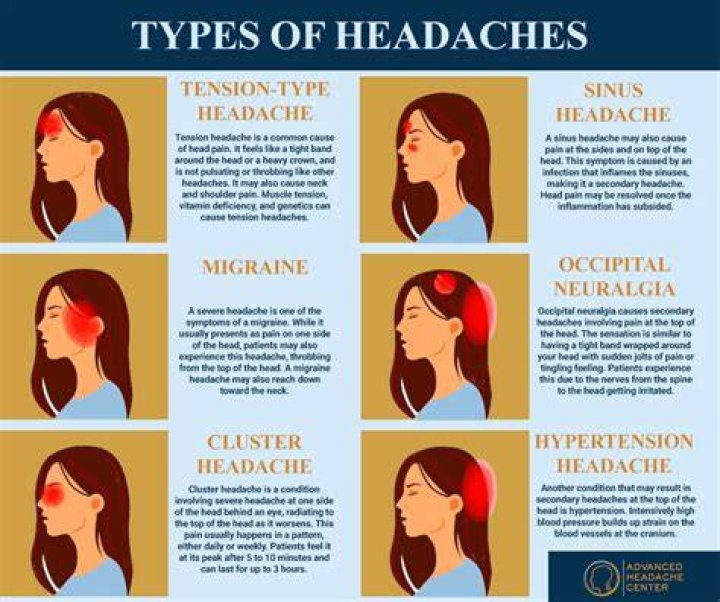
Also, what are the different types of headaches?
- Head pain can be classified as being one of three types: 1) primary headache, 2) secondary headache, and 3) cranial neuralgias, facial pain, and other headaches.
- Common primary headaches include tension, migraine, and cluster headaches.
Just so, what happens to the brain when you have a headache?
The brain tells you when other parts of your body hurt, but it can't feel pain itself. Most headaches happen in the nerves, blood vessels, and muscles that cover a person's head and neck. These nerves send a rush of pain messages to the brain, and this brings on a headache.
Is it normal to have a headache for a week straight?
In most cases, they are mild to moderate in severity and occur infrequently. But a few people get severe tension headaches, and some are troubled by them for three or four times a week. The typical tension headache produces a dull, squeezing pain on both sides of the head.
Related Question Answers
Why is my headache not going away?
Cervicogenic headachesSometimes your headaches actually aren't coming from your head at all. And if the underlying cause — the problem in your neck — isn't treated, your headache won't go away. Cervicogenic headaches can be caused by injuries, arthritis, bone fractures, tumors, or infection.Why am I getting a headache every day?
Many times headaches can be caused by a “trigger” (something specific that activates the headache such as skipping meals, hormonal changes during your period, getting too much sleep or not enough sleep, being dehydrated, and/or stressed).What is a thunderclap headache?
A thunderclap headache is a severe headache that starts suddenly. This type of headache pain doesn't gradually build in intensity. Instead, it's an intense and very painful headache as soon as it starts. In fact, it's frequently described as the worse headache of one's life.How do I know if my headache is serious?
Your headache pain may be serious if you have: sudden, very intense headache pain (thunderclap headache) severe or sharp headache pain for the first time. a stiff neck and fever.What does a high blood pressure headache feel like?
“The resulting headache feels unlike any other kind of migraine or head pain. “Traditional headache treatments such as aspirin are ineffective to relieve the pain. “It could also be causing blurred vision, chest pain and nausea.” Contact your doctor if you're suffering from a headache caused by high blood pressure.Why do I have a continuous headache?
Often, headaches are triggered by lifestyle or environmental factors such as stress, changes in weather, caffeine use, or lack of sleep. Overuse of pain medication can also cause a constant headache.What gets rid of headaches fast?
Here are some tips for headache relief:- Close your eyes and rest.
- Massage your neck and temples.
- Warm up your neck Try putting a heating pad or a warm cloth around your neck and the base of your skull to ease tension headaches.
- Relax.
- Minimize stress.
- Watch what you eat and drink.
Why does my head hurt so bad?
Tension headaches occur when the muscles in your head and neck tighten, often because of stress or anxiety. Intense work, missed meals, jaw clenching, or too little sleep can bring on tension headaches. Over-the-counter medicines such as aspirin, ibuprofen, or acetaminophen can help reduce the pain.Is it okay to sleep with a headache?
Although more studies are needed, a small study has shown promise for sleep being a combatant against headache pain. Out of 32 participants with persistent tension-type headaches, 81 percent said going to sleep was their most effective strategy for getting rid of a headache.What is a stress headache?
Tension headaches are dull pain, tightness, or pressure around your forehead or the back of your head and neck. Some people say it feels like a clamp squeezing the skull. Often called stress headaches, they're the most common type for adults.Can you die from a headache?
Your Brain on Migraine PainIn certain cases, a migraine may come with a complication that doctors call migrainous infarction, which can lead to a stroke. In this case, brain cells die because the stroke cuts off their blood supply. This is very serious but also very rare.Why does my head hurt in the front?
Tension headaches are often triggered by stress, anxiety, or depression. They are sometimes caused by tiredness, bad posture, or musculoskeletal problems in the neck. Pain from tension headaches can often be relieved by taking over-the-counter (OTC) painkillers, such as ibuprofen, acetaminophen, or aspirin.Does your brain swell when you have a headache?
Migraine pain occurs when excited brain cells trigger the trigeminal nerve, one of five nerves located in the brain, to release chemicals that irritate and cause blood vessels on the surface of the brain to swell, according to the National Headache Foundation. Pain can also occur in the face, sinus, jaw or neck area.Why do people get migraines?
Emotional triggers: Stress, depression, anxiety, excitement, and shock can trigger a migraine. Physical causes: Tiredness and insufficient sleep, shoulder or neck tension, poor posture, and physical overexertion have all been linked to migraines. Low blood sugar and jet lag can also act as triggers.What happens when you have a headache for 3 days?
Migraine headaches are often described as pounding, throbbing pain. They can last from 4 hours to 3 days and usually happen one to four times a month. Along with the pain, people have other symptoms, such as sensitivity to light, noise, or smells; nausea or vomiting; loss of appetite; and upset stomach or belly pain.How do u get rid of a headache without medicine?
Try these tips and get to feeling better fast.- Try a Cold Pack. If you have a migraine, place a cold pack on your forehead.
- Use a Heating Pad or Hot Compress.
- Ease Pressure on Your Scalp or Head.
- Dim the Lights.
- Try Not to Chew.
- Get Some Caffeine.
- Practice Relaxation.
- Take Some Ginger.
How long should a headache last?
Healthy habits could help cut severe headaches short. The average tension headache — the most common type of headache — lasts about four hours. But for some people, severe headaches drag on much longer, sometimes for several days.How do you cure a side headache?
Here are 18 effective home remedies to naturally get rid of headaches.- Drink Water. Inadequate hydration may lead you to develop a headache.
- Take Some Magnesium.
- Limit Alcohol.
- Get Adequate Sleep.
- Avoid Foods High in Histamine.
- Use Essential Oils.
- Try a B-Complex Vitamin.
- Soothe Pain with a Cold Compress.
What do you eat when you have a headache?
What foods are good for migraines?- orange, yellow, and green vegetables, such as summer squash, sweet potatoes, carrots, and spinach.
- carbonated, spring, or tap water.
- rice, especially brown rice.
- dried or cooked fruits, particularly non-citrus kinds such as cherries and cranberries.