What is concrete construction?
 Matthew Perez
 .
Likewise, people ask, what is concrete explain?
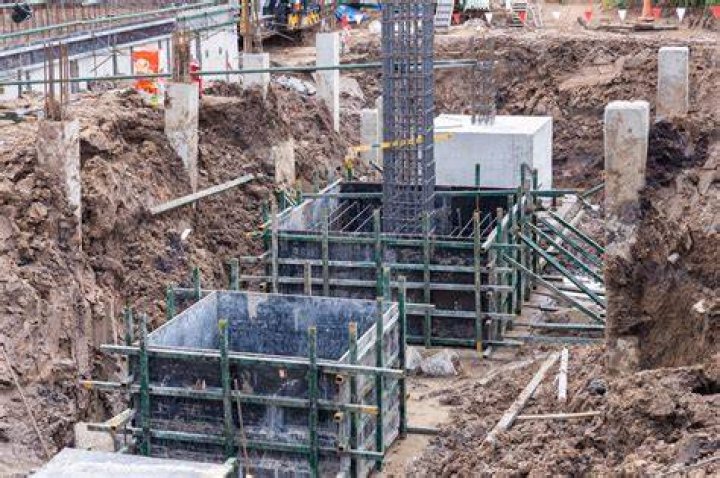
Concrete is a construction material composed of cement, fine aggregates (sand) and coarse aggregates mixed with water which hardens with time. Portland cement is the commonly used type of cement for production of concrete. Concrete technology deals with study of properties of concrete and its practical applications.
Also, why is concrete important in construction? Concrete is safe, secure and healthy for building occupants. Being an inert construction material, concrete does not burn. Superior quality of construction helps prevent the entry of pollen, dust and other airborne pollutants. Concrete is a known quantity to designers, engineers and builders.
Similarly one may ask, what is concrete and how is it made?
Concrete is a composite material composed of fine and coarse aggregate bonded together with a fluid cement (cement paste) that hardens (cures) over time. When aggregate is mixed with dry Portland cement and water, the mixture forms a fluid slurry that is easily poured and molded into shape.
What are the concrete materials?
Materials in Concrete. The principal ingredients that make up the concrete mix are: cement, fine aggregate, coarse aggregate, water, chemical admixtures, and mineral admixtures. Concrete used in construction may also contain reinforcing bars, welded wire fabric (wire mesh), and various reinforcing fibers.
Related Question Answers
Where is concrete commonly used?
Concrete is the most commonly used man-made material on earth. It is an important construction material used extensively in buildings, bridges, roads and dams. Its uses range from structural applications, to paviours, kerbs, pipes and drains.Why is concrete important?
Why it is popularMost buildings (individual and commercial) use concrete because it is a strong element. Concrete solidifies and hardens after mixing with water and placement due to a chemical process known as hydration.What is concrete used for?
Concrete is the most commonly used man-made material on earth. It is an important construction material used extensively in buildings, bridges, roads and dams. Its uses range from structural applications, to paviours, kerbs, pipes and drains.How is concrete formed?
In its simplest form, concrete is a mixture of paste and aggregates. The paste, composed of portland cement and water, coats the surface of the fine and coarse aggregates. Through a chemical reaction called hydration, the paste hardens and gains strength to form the rock-like mass known as concrete.How many types of concrete are there?
Typically, there are twenty-four different types of concrete used in the building and construction industry depending on the type of construction.What is modern concrete?
Modern concreteRegular concrete is the lay term for concrete that is produced by following the mixing instructions that are commonly published on packets of cement, typically using sand or other common material as the aggregate, and often mixed in improvised containers.What is the lifetime of concrete?
30 to 100 years
What are the properties of concrete?
Different properties of concrete:- Grades (M20, M25, M30 etc.)
- Compressive strength.
- Characteristic Strength.
- Tensile strength.
- Durability.
- Creep.
- Shrinkage.
- Unit weight.
Is Concrete bad for the environment?
The environmental impact of concrete, its manufacture and applications, are complex. Concrete causes damage to the most fertile layer of the earth, the topsoil. Concrete is used to create hard surfaces which contribute to surface runoff that may cause soil erosion, water pollution and flooding.Is concrete stronger than cement?
Concrete is more durable than cement.Yes, concrete can last hundreds of years, but cement is much less durable. To use an analogy, cement is to concrete as milk is to ice cream. Sure, ice cream has milk in it, but it isn't milk. It's actually much better.What is the synonym of concrete?
Synonyms. building material reinforced concrete cement ferroconcrete pavement sand paving material paving. Antonyms.What is difference between concrete and cement?
What is the difference between cement and concrete? Although the terms cement and concrete often are used interchangeably, cement is actually an ingredient of concrete. Concrete is a mixture of aggregates and paste. The aggregates are sand and gravel or crushed stone; the paste is water and portland cement.What are the 5 types of cement?
14 Different types of cement :-- Ordinary Portland Cement (OPC): This is the most common type of cement which is extensively used.
- Rapid Hardening cement:
- Low heat portland cement: –
- Sulphate Resisting Portland Cement:-
- High alumina Cement:-
- Blast furnace slag cement:-
- Coloured Cement:-
- Pozzolana cement :-
Is concrete poisonous?
The presence of some substances in concrete, including useful and unwanted additives, can cause health concerns due to toxicity and (usually naturally occurring) radioactivity. Wet concrete is highly alkaline and should always be handled with proper protective equipment.How strong is concrete?
It is concrete that is strong enough to carry a compressive stress of 3,000 psi at 28 days. Concrete may be specified at other strengths as well. Conventional concrete has strengths of 7,000 psi or less; concrete with strengths between 7,000 and 14,500 psi is considered high-strength concrete.What are the advantages of concrete?
10 major advantages of concrete are explained below.- Concrete is Economical.
- Concrete Hardens at Ambient Temperature.
- Ability to be Cast into Shape.
- Energy Efficiency in Production.
- Excellent Water Resistance Characteristics.
- High-temperature resistance.
- Ability to Consume and Recycle Waste.
- Application in Reinforced Concrete.
How concrete is used in construction?
It is an important construction material used extensively in buildings, bridges, roads and dams. Concrete is a composite material, consisting mainly of Portland cement, water and aggregate (gravel, sand or rock). When these materials are mixed together, they form a workable paste which then gradually hardens over time.Is concrete sustainable?
Concrete is a sustainable building material – providing energy efficiency, long-life cycle, lower life-cycle costs and resilience following natural and man-made disasters.What are the raw materials for concrete?
The most common raw rock types used in cement production are:- Limestone (supplies the bulk of the lime)
- Clay, marl or shale (supplies the bulk of the silica, alumina and ferric oxide)
- Other supplementary materials such as sand, fly ash/pulverised fuel ash (PFA), or ironstone to achieve the desired bulk composition.