In semiconductor devices, a backward diode (also called back diode) is a variation on a Zener diode or tunnel diode having a better conduction for small reverse biases (for example –0.1 to –0.6 V) than for forward bias voltages..
Regarding this, what is a reverse biased diode?
Reverse bias usually refers to how a diode is used in a circuit. If a diode is reverse biased, the voltage at the cathode is higher than that at the anode. Therefore, no current will flow until the electric field is so high that the diode breaks down.
Furthermore, what is forward and reverse bias? Forward biasing means putting a voltage across a diode that allows current to flow easily, while reverse biasing means putting a voltage across a diode in the opposite direction. The voltage with reverse biasing doesn't cause any appreciable current to flow.
Furthermore, what is the use of reverse bias?
When the diode is reverse biased, the electric field due to the battery and the electric field of the depletion region are in the same direction. This makes the electric field even stronger than that before reverse bias was applied.
What happens when a pn junction diode is reverse biased?
When a p-n junction is reversed biased, the negative terminal of the battery attracts the free holes in the p-type towards itself whereas the positive terminal attracts the free electrons in n-type towards itself.
Related Question Answers
Does a diode block voltage?
Yes the diode is blocking the water-flow if the level on the other side is higher, so water levels remain what they were. No current is flowing and the voltages act like there is just an open connection.What happens if a diode is reversed?
Voltage connected to the diode in this direction is called forward bias. But if you reverse the voltage direction, applying the positive side to the cathode and the negative side to the anode, current doesn't flow. In effect, the diode becomes an insulator. Reverse bias doesn't allow current to flow.What is the reverse bias?
reverse bias The applied d.c. voltage that prevents or greatly reduces current flow in a diode, transistor, etc. For example, a negligible current will flow through a diode when its cathode is made more positive than its anode; the diode is then said to be reverse biased.What is reverse breakdown voltage?
The breakdown voltage of an insulator is the minimum voltage that causes a portion of an insulator to become electrically conductive. For diodes, the breakdown voltage is the minimum reverse voltage that makes the diode conduct appreciably in reverse.Which diode is used in Rectifier?
Rectifier diodes are a vital component in power supplies where they are used to convert AC voltage to DC voltage. The Zener diodes are used for voltage regulation, preventing unwanted variations in DC supplies within a circuit.What do u mean by diode?
A diode is a specialized electronic component with two electrodes called the anode and the cathode. Most diodes are made with semiconductor materials such as silicon, germanium, or selenium. The fundamental property of a diode is its tendency to conduct electric current in only one direction.What is diode characteristics?
Diode Characteristics. A diode is simply a PN junction, but its applications are extensive in electronic circuits. Three important characteristics of a diode are, first of all, the forward voltage drop. Reverse voltage drop that will reverse current flow and in most cases destroy the diode.How do you read a diode symbol?
Circuit SymbolThe positive end of a diode is called the anode, and the negative end is called the cathode. Current can flow from the anode end to the cathode, but not the other direction.What happens if the reverse bias is made very high?
What happens if the reverse bias is made very high? If reverse bias voltage exceeds the permissible limit, reverse leakage current of the device will go dangerously high and may result in irreversible damage of the component. If the device simply opens, the damage may be limited only to the said device.How do you reverse bias?
Connecting the p-type region to the negative terminal of the battery and the n-type region to the positive terminal corresponds to reverse bias. If a diode is reverse-biased, the voltage at the cathode is comparatively higher than at the anode. Therefore, very little current flows until the diode breaks down.How does current flow in reverse bias?
In the reverse bias the voltage increases in the reverse direction across the p-n junction, but no current due to the majority carriers, only a very small leakage current flows. At this situation sharp current will flow through this junction. This breakdown of voltage is of two types.What is knee voltage?
The minimum amount of voltage required for conducting the diode is known as “knee voltage” or “cut-in-voltage". And also said as The forward voltage at which the current through PN junction starts increasing rapidly is known as knee voltage. Knee voltage of “germanium” diode is-0.3volts.What is an ideal diode?
An ideal diode is a diode that acts like a perfect conductor when voltage is applied forward biased and like a perfect insulator when voltage is applied reverse biased. So when positive voltage is applied across the anode to the cathode, the diode conducts forward current instantly.What is cut in voltage?
Cut-in voltage or knee voltage or threshold voltage is the minimum voltage( in forward bias condition)after which the diode current rises rapidly and diode is said to be conducting for silicon it's 0.7 volt and for germanium it's 0.3.What is Zener diode used for?
Zener diodes are widely used as voltage references and as shunt regulators to regulate the voltage across small circuits. When connected in parallel with a variable voltage source so that it is reverse biased, a Zener diode conducts when the voltage reaches the diode's reverse breakdown voltage.Why the photodiode is reverse biased?
The photodiode is reverse biased for operating in the photoconductive mode. As the photodiode is in reverse bias the width of the depletion layer increases. This reduces the junction capacitance and thereby the response time. In effect, the reverse bias causes faster response times for the photodiode.What is the function of diode?
The most common function of a diode is to allow an electric current to pass in one direction (called the diode's forward direction), while blocking it in the opposite direction (the reverse direction). As such, the diode can be viewed as an electronic version of a check valve.What is forward and reverse voltage?
The reverse voltage is the voltage drop across the diode if the voltage at the cathode is more positive than the voltage at the anode (if you connect + to the cathode). As with forward voltage, a current will flow if the connected voltage exceeds this value.What is mean by biasing?
Biasing in electronics means establishing predetermined voltages or currents at various points of an electronic circuit for the purpose of establishing proper operating conditions in electronic components. The AC signal applied to them is superposed on this DC bias current or voltage. 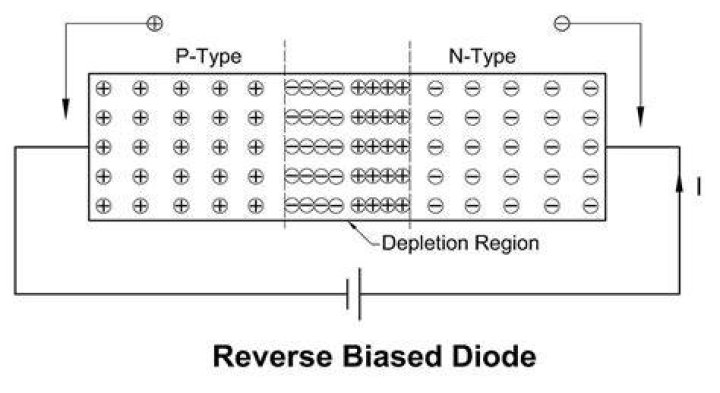
 Ethan Hayes