Spraying and dusting, in agriculture, the standard methods of applying pest-control chemicals and other compounds. In spraying, the chemicals to be applied are dissolved or suspended in water or, less commonly, in an oil-based carrier..
In this regard, how pesticides are applied?
Pesticides are applied to the seed prior to planting, in the form of a seed treatment, or coating, to protect against soil-borne risks to the plant; additionally, these coatings can provide supplemental chemicals and nutrients designed to encourage growth.
Secondly, what are the types of sprayer? The sprayer types are: backpack, spot, ATV, UTV, tow behind, truck bed, 3 point hitch, boom, boomless, and mist. Sprayers are most commonly used for the projection of water, weed killers, crop performance materials, and/or pest maintenance chemicals (herbicides, fertilizers, pesticides, insecticides).
One may also ask, what is the difference between fumigation and spraying?
With fumigation, the chemicals penetrate the entire area, essentially leaving no pests left alive. Spraying, on the other hand, is typically a preventative measure that is done before you have entered your space. It kills any existing pests, but uses different chemicals than fumigation.
Is crop spraying dangerous?
Crop spraying with the world's most widely used pesticide is a greater danger than passive smoking to children living near the fields. A new study has linked spraying with elemental sulphur to raised evidence of asthma and breathing problems in children.
Related Question Answers
Are pesticides safe after they dry?
Originally Answered: Are pesticides safe after they dry? Most are very safe after they are dry. Most of the time the most dangerous they become is if the concentrate is burned, vaporized and inhaled. Pesticides are made to work on “target pests”, most of the time, mammals are not pests you can spray for.What are the 4 types of pesticides?
Types of Pesticides - Insecticides – insects.
- Herbicides – plants.
- Rodenticides – rodents (rats & mice)
- Bactericides – bacteria.
- Fungicides – fungi.
- Larvicides – larvae.
What are the most commonly used pesticides?
Chlorpyrifos, one of the most widely used pesticidesIntroduced by Dow Chemical in 1965, chlorpyrifos is the most widely-used pesticide on crops, including corn, soybeans, broccoli, and apples, and is also widely used in non-agricultural settings like golf courses (Figure 1).How do you clean your house after using pesticides?
After treatments dry they are not easily absorbed into hands or paws. As for cleaning after pest spray is put down, interior treatments can be cleaned and mop as needed. Deep cleaning like polishing the floor (which leaves a residue that can cover the treated area) should be done before your service.How long does insecticide last?
Storage Life. In general, insecticide manufacturers recommend disposing of their products after two years and usually won't guarantee effectiveness for any longer than two years.How long after spraying insecticide is it safe?
What's more, there is no scientific standard for how long one should stay off a lawn after it is treated. Many companies that use these chemicals warn that people should stay away from sprayed surfaces for six to 24 hours.What type of pesticides do farmers use?
Many farmers choose to use chemicals to keep weeds and pests from destroying their crops and to add more nutrients to the soil. There are three different kinds of pesticides; herbicides, insecticides and fungicides. All three of these pesticides are used to kill different kinds of pests that can be found on a farm.How long do you have to stay out of your house after pest control?
Most foggers or bombs recommend that you are out of the home for 2-4 hours followed by at least 1/2 hour of venting the home by opening the windows. Most insecticide spray products recommend that you stay out of the treated area until it has had time to dry.Is fumigation harmful to humans?
The claim may occasionally be made by unqualified or irresponsible persons that a certain fumigant is poisonous to insects but harmless to humans. From their very nature as volatile, penetrating and toxic chemicals, all materials used as fumigants can, if not used with proper precautions, poison human beings.How much does it cost to fumigate your house?
Afterwards, your home is unsealed, and once air samples are taken to ensure the air is no longer toxic you can return to your termite-free home. Fumigation typically costs between $1,200 and $2,500 for a 1,250-square foot house and $2,200 -$3,800 for a 2,500-square foot house.How long after fumigation is it safe?
As with any type of product you use in your home, your best bet is to follow the directions on the product label. Pest professionals will recommend that the house aerates for a minimum of 8 hours after a fumigation service.Which chemical is used in fumigation?
Liquid fumigation acts quicker than solid fumigation. This type of fumigation is usually performed outside or in an enclosed area. Typical chemicals that are used in this form are carbon disulfide, ethyl acetate, chloroform, carbon tetrachloride, sulfuryl fluoride, ethylene dichloride and methyl bromide.How do spray guns work?
Spray gun. Spray gun, painting tool using compressed air from a nozzle to atomize a liquid into a controlled pattern. The spray nozzle operates by impinging high-velocity turbulent air on the surface of filaments or films of liquid, causing them to collapse to droplets with a wide range of sizes.What are the major parts of sprayers?
BASIC COMPONENTS OF A SPRAYERComponents of a sprayer are as follows a) Pump b) Chemical tank c) agitator d) Air chamber e) pressure gauge f) Pressure regulator g) valves h) Strainer i) suction line j) delivery line k) nozzles Pump : A pump is a device used to move fluids, such as liquids or slurries, or gases from oneWhat is spraying equipment?
A sprayer is a device used to spray a liquid, where sprayers are commonly used for projection of water, weed killers, crop performance materials, pest maintenance chemicals, as well as manufacturing and production line ingredients.What are the types of nozzle?
There are 5 basic spray pattern types: flat fan, solid stream, full cone, hollow cone and mist/fog. Various nozzle designs are deployed to create these patterns and details on each can be found in the sections below.How do nozzles work?
Nozzle is a cylindrical or round spout at the end of a pipe, hose, or tube used to control a jet of gas or liquid. working process: due this reduction in cross sectional area , the fluid experiences a pressure drop as it exits from the other end of the nozzle, but its flow velocity increases considerably.What is a boom spray?
Boom sprayers are used to apply liquid fertilizers, pesticides, or other liquids to crops during their vegetative cycle. Boom sprayers are used on different crops on the farm, the sprayer's height is adjustable to ensure that crops receive the correct amount of the liquid being dispensed. 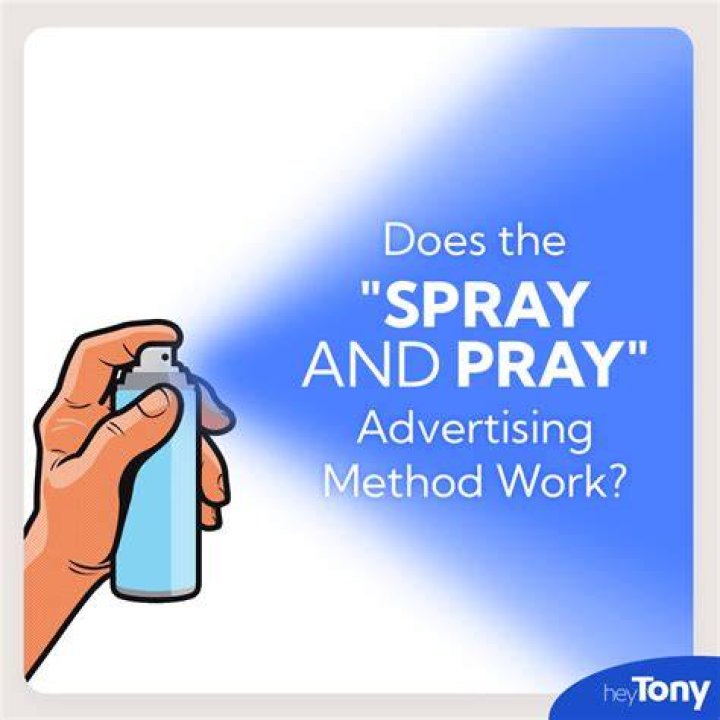
 Michael Green