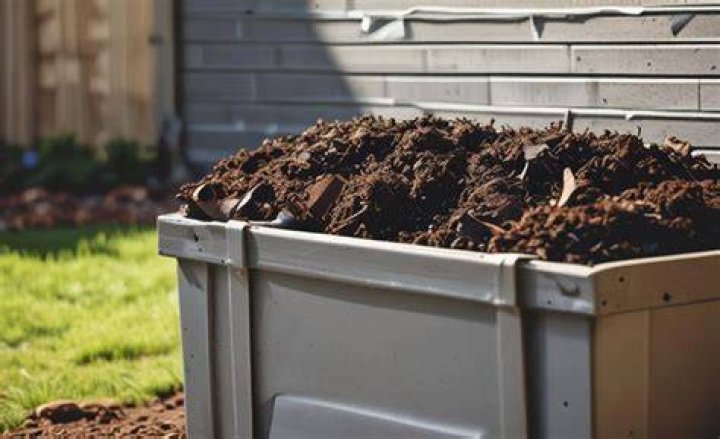
Why doesn't my compost pile heat up?
 Matthew Perez
 .
Also asked, why doesn't my compost pile heat up?
If the compost pile is not heating up, then the pile is too wet or too dry or there is not enough green material (or nitrogen) present. If too wet, the material should be spread out to dry. Also, heat is the driving force to kill funguses or other living material in the pile prior to placing it in the vegetable bed.
Additionally, how long does it take for compost pile to heat up? two weeks
Secondly, how do I heat up my compost pile?
How to Make Compost Piles Heat Up Faster
- Use small material in the compost pile.
- Combine green nitrogen-rich materials, such as grass clipping and plant trimmings, with brown carbon-rich materials, such as dead leaves and sawdust.
- Sprinkle 1 inch of healthy garden soil between the layers in the pile.
Why does a compost pile get hot?
Temperatures rising in a hot-compost pile come from the activity of numerous organisms breaking down organic matter. To keep a pile running hot, pay attention to four elements: carbon, nitrogen, water, and air. A hot pile requires enough high-nitrogen materials to get the pile to heat up.
Related Question Answers
Where should compost be in sun or shade?
You can put your compost pile in the sun or in the shade, but putting it in the sun will hasten the composting process. Sun helps increase the temperature, so the bacteria and fungi work faster. This also means that your pile will dry out faster, especially in warm southern climates.How often should you turn a compost pile?
How often you should turn compost depends on a number of factors including size of the pile, green to brown ratio and amount of moisture in the pile. That being said, a good rule of thumb is to turn a compost tumbler every three to four days and the compost pile every three to seven days.Can I keep adding to my compost pile?
Both are necessary in a compost pile to help it heat up and decompose. KEY POINT: Most people who compost using the Add-as-You-Go method are regularly adding daily kitchen waste to the pile; therefore, a little stockpile of BROWN material is beneficial to have around.How do I accelerate my compost pile?
Jumpstart Your Compost- Size it right. Compost piles that are about 1 cubic yard (3 ft square by 3 ft high) get hotter quicker.
- Turn it over. Microbes need oxygen to do their work.
- Keep the combo right. For rapid decomposition, your compost pile should have a carbon to nitrogen ratio of about 20:1.
- Keep it moist.
- Shred it.
Should I cover my compost pile?
Cover with anything you have – wood, plastic sheeting, carpet scraps. Covering helps retain moisture and heat, two essentials for compost. Covering also prevents the compost from being over-watered by rain. The compost should be moist, but not soaked and sodden.Is urine good for compost?
Human Pee Added to Compost Boosts Crops. People have been using manure as fertilizer for millennia. But scientists now believe they can turn human urine into liquid gold—as composting material. The premise is simple: Pee is rich in nitrogen, which plants desperately need.How do you know if compost is working?
There are a few ways to tell if your compost is ready to use:- 1 It looks like dark, crumbly topsoil.
- 2 It has a pleasant, earthy odor.
- 3 The original organic materials (with a few exceptions) should no longer be recognizable.
- 4 The compost pile should have shrunk by half the size.
How hot can a compost pile get?
120-170 degrees Fahrenheit
What is the difference between hot and cold composting?
Cold composting uses many of the same ingredients as hot composting, but requires less attention and a longer decomposition period. Many gardeners prefer the cold composting method because it requires much less effort and maintenance to create the same nutrient-rich garden humus that hot composting makes.Why is my compost not breaking down?
A: Here are the top 4 reasons for a compost pile not breaking down: Pile is too Dry: Add water to the pile. For tips on getting the moisture content right see the measuring moisture section. Too little Air: Many of the organisms that break down your compost pile need air to live.How do you activate compost?
Moisture is necessary to activate compost.The simplest way to check this is to reach your hand into the pile and squeeze. It should feel like a slightly damp sponge. Your compost pile may also simply lack the right bacteria needed to start the compost pile decomposing and heating up.What is a compost accelerator?
Compost accelerators are used to speed up the natural decomposition process that takes place in the pile. A compost booster is made up of minerals and microbes that encourage decomposition, so your compost can be used more quickly.How is matting of vegetation bad to a compost pile?
A compost pile overburdened with materials that mat down when wet—grass clippings, spoiled hay, heaps of unshredded tree leaves—can become so dense that the pile's center receives no air. Aerobic bacteria—the tiny microorganisms that make compost cook—cannot live in such an oxygen-poor environment.How long until compost is ready?
A compost tumbler helps compost break down more quickly. Depending on the factors above your compost could take anywhere from four weeks to 12 months to fully decompose. If you're using a tumbler, you'll have ready-to-use compost in three weeks to three months.Why is my compost clumping?
There are three causes of a very wet compost: poor air flow, excess moisture, or not enough nitrogen-rich ingredients in the compost pile. A too wet compost pile can be the result of too many ingredients that clump together when wet, such as grass clippings, whole leaves, and hay.Can you put eggshells in compost?
The answer to this is yes, you can. Adding eggshells to compost will help add calcium to the make up of your final compost. This important nutrient helps plants build cell walls. While you don't need to crush eggshells before composting them, doing so will speed up how fast the eggshells break down in the compost.What are the disadvantages of compost?
The Disadvantages of Composting- Effort. Perhaps the most apparent disadvantage of composting is the amount of effort involved.
- Amount Required. Composting is especially laborious when you consider the quantity required to fertilize a sizable garden.
- Lost Nutrients.
- Cover Crops.